fungus · The Trophy Room
False Chanterelle
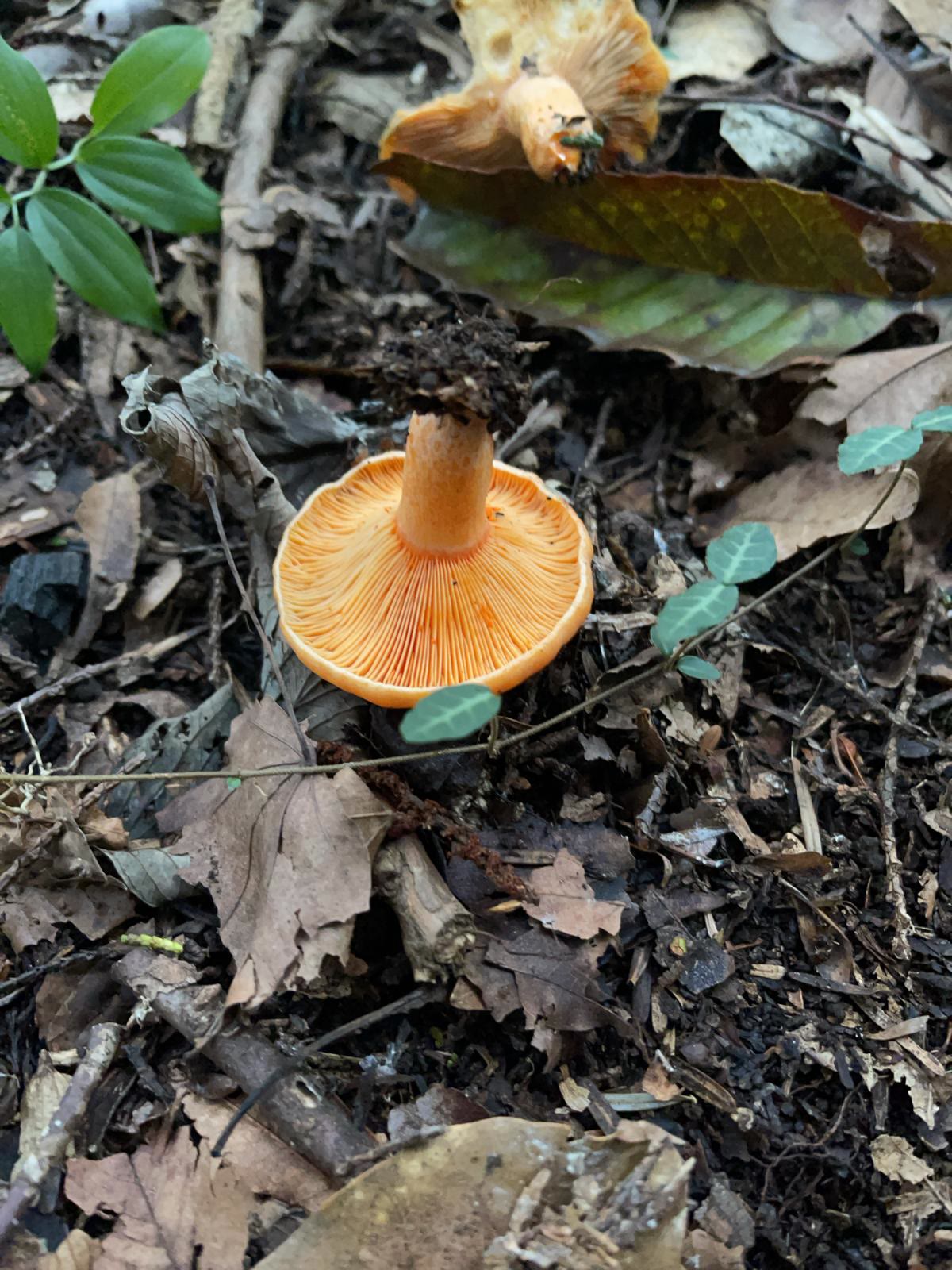
The lesson every forager needs holding right next to the prize. The false chanterelle turns up in the same woods at the same time, and telling it from the real thing is exactly the skill that keeps you safe. Not a deadly mushroom, but a genuinely useful teacher.
Identifying
- TRUE gills — thin, soft, crowded, sharply forked blades, not the blunt ridges of a real chanterelle
- deeper orange, often darker toward the center; cap velvety and flatter
- grows from wood and rotten conifer duff, frequently in clusters
- flesh is soft and thin, not the firm white string of a true chanterelle — and no apricot smell
Facts
- generally considered inedible-to-mildly-upsetting; some people react to it, some don't — not worth the gamble
- the single best teaching mushroom in the woods: learn its true gills and the real chanterelle's false ones stop being confusing forever
- the rule: blunt forked ridges = chanterelle · thin knife-edge gills = walk away
Field Kitchen status
No recipe: this is a chanterelle look-alike and is not treated as food here.